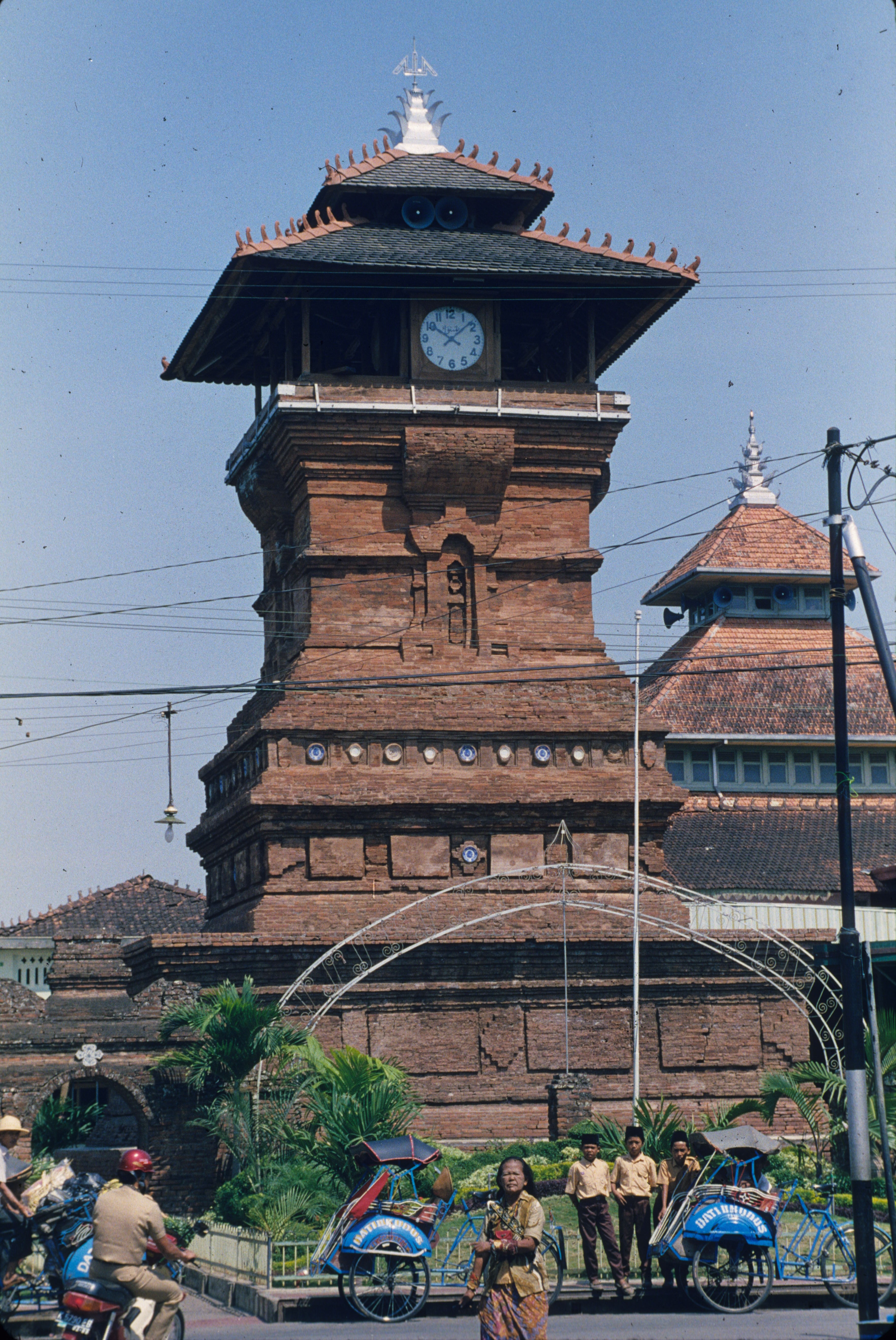


Menara Kudus Mosque
The Menara Kudus Mosque (Indonesian: Masjid Menara Kudus) or Al-Aqsha Mosque is located in Kudus in the Indonesian province of Central Java. Dating from 1549, it is one of the oldest mosques in Indonesia, built at the time of Islam’s spread through Java.[1] The mosque preserves the tomb of Sunan Kudus, one of the nine Islamic saints of Java (the Wali Sanga), and is a popular pilgrimage point.[2]
メナラ クドゥス モスク (インドネシア語: Masjid Menara Kudus) またはアル アクシャ モスクは、インドネシア中部ジャワ州のクドゥスにあります。 1549 年に遡るこのモスクは、インドネシアで最も古いモスクの 1 つで、イスラム教がジャワ島に広まったときに建てられました。[1] モスクには、ジャワのイスラム教の 9 人の聖人 (ワリ サンガ) の 1 人であるスナン クドゥスの墓が保存されており、人気の巡礼地です。[2]。
It preserves pre-Islamic architectural forms such as old Javanese split doorways, ancient Hindu-Buddhist-influenced Majapahit-style red brickwork, and a three-tired pyramidal roof.[2] The most unusual feature is the brick minaret on which a pavilion shelters a large skin drum (bedug), which is used to summon the faithful to prayer instead of the more common muezzin. Whereas a bedug normally hangs under the eaves of a mosque veranda, in the Kudus Mosque it sits in a tower like a Balinese Hindu temple kul-kul or signal drum used to warn of an impending attack, fire, or communal event. No other mosque in Java is known to have a drum tower of this type.[3]
古いジャワの分割戸口、古代ヒンズー教と仏教の影響を受けたマジャパヒト様式の赤レンガ、3 つのピラミッド型の屋根など、イスラム以前の建築様式が保存されています。[2] 最も珍しい特徴は、パビリオンが大きな皮太鼓 (ベドゥグ) を収容するレンガ造りのミナレットです。このミナレットは、より一般的なムエジンの代わりに信者を祈りに呼び出すために使用されます。通常、ベドゥグはモスクのベランダの軒下にぶら下がっていますが、クドゥス・モスクでは、差し迫った攻撃、火災、または共同体での出来事を警告するために使用されるバリのヒンズー教寺院クルクルまたは信号ドラムのような塔の中に座っています。ジャワの他のモスクには、このタイプの鼓楼があることは知られていません。[3]。
In front of the minaret and around the compound are walls and gateways in the old candi bentar (split gate) and kori agung (main gate) styles. Inside are two gateways—a smaller, inner gate with relief panels on either side similar to those found in Mantingan, and an outer gate that is reminiscent of the 14th-century Bajang Ratu gate at Trowulan. Other pre-Islamic touches include 8 kala-head water spouts in the ablution area and Ming porcelain plates set in the walls.[3]ミナレットの前と敷地の周囲には、古いチャンディ ベンタル (分割門) とコリ アグン (正門) スタイルの壁と門があります。内部には 2 つの門があります。1 つはマンティンガンで見られるものと同様のレリーフ パネルが両側にある小さな内門で、もう 1 つはトロウランにある 14 世紀のバジャン ラトゥ門を彷彿とさせます。その他、イスラム以前の雰囲気には、沐浴エリアの 8 つのカラヘッド水の噴出口や、壁に設置された明の磁器プレートなどがあります。[3]。
The pre-Islamic elements suggest the complex has incorporated a pre-existing Hindu-Javanese structure. The mosque has been rebuilt several times removing evidence of what the original structure looked like. The Majapahit style gates, walls, and minaret that appear so incongruous today may have blended more harmoniously with the main structure (which probably had a meru roof supported by large pillars, as in Cirebon and Demak).[3] The peaked roof is a 1920s renovation with terracotta tiles replacing wooden tiles, with glass windows inserted between the roof tiers. The roof is topped with a mastaka crown roof element.[2] An inscription over the mihrab says the mosque was founded by Ja’far Shodiq in AH 956 (AD 1549). He is believed to be the venerated Sunan Kudus, one of the nine Islamic saints of Java (Wali Sanga) who lies buried in an elaborately carved mausoleum behind the mosque.[3][4] The complex includes a Mogul-style mosque with a silvery onion dome and concrete pillars.[3]
イスラム以前の要素は、この複合施設が既存のヒンドゥー教とジャワの構造を組み込んでいることを示唆しています。モスクは何度か再建され、元の構造がどのようであったかの証拠は取り除かれています。今日では非常に不調和に見えるマジャパヒト様式の門、壁、ミナレットは、主要な構造とより調和して溶け合っていた可能性があります (チルボンやデマックのように、おそらく大きな柱で支えられたメル屋根があったでしょう)。[3] とがった屋根は 1920 年代に改修され、木のタイルの代わりにテラコッタのタイルが使用され、屋根の層の間にガラス窓が挿入されています。屋根はマスタカ クラウンの屋根要素で覆われています。[2] ミフラーブ上の碑文には、モスクが AH 956 (西暦 1549 年) にジャファル ショディクによって設立されたことが記載されています。彼は、ジャワのイスラム教の 9 人の聖人 (ワリ サンガ) の 1 人である尊敬されるスナン クドゥスであると信じられています。モスクの裏にある精巧な彫刻が施された霊廟に埋葬されています。[3][4] この複合施設には、銀色のタマネギのドームとコンクリートの柱を備えたムガール様式のモスクが含まれています。


コメントを残す