

Candi Sukuh
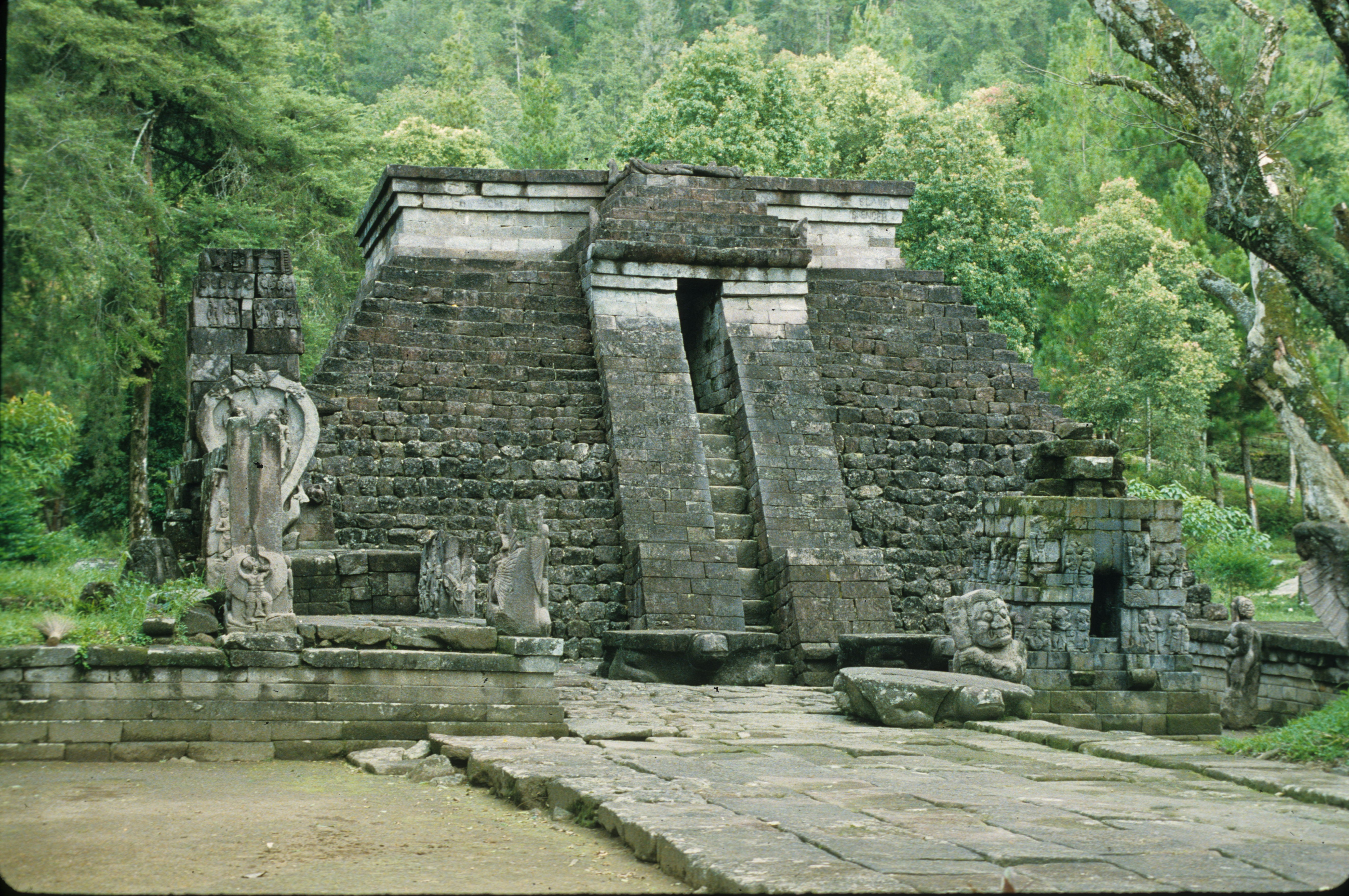
Sukuh (Indonesian: Candi Sukuh, Indonesian pronunciation: [ˌtʃandi ˈsukʊh]) is a 15th-century Javanese–Hindu temple (candi) that is located in Berjo, Ngargoyoso district, Karanganyar Regency, Central Java, Indonesia on the western slope of Mount Lawu (elevation 910 metres (2,990 ft)). This temple has a height of 8.7 metres (29 ft). Sukuh temple has a distinctive thematic relief from other candi where life before birth and sexual education are its main themes. Its main monument is a simple pyramid structure with reliefs and statues in front of it, including three tortoises with flattened shells and a male figure grasping his penis. A giant 1.82 m (6 ft) high of Shishna with four testes, representing penile incisions,[1] was one of the statues that has been relocated to the National Museum of Indonesia.
スクー (インドネシア語: Candi Sukuh、インドネシア語発音: [ˌtʃandi ˈsukʊh] ) は、インドネシア中部ジャワ州カランガンヤル県ンガルゴヨソ地区のベルジョにある、ラウ山 (標高 910 メートル (2,990 フィート)) の西斜面にある 15 世紀のジャワ・ヒンズー教寺院 (チャンディ) です。この寺院の高さは 8.7 メートル (29 フィート) です。スク寺院には、出生前の生活と性教育が主なテーマである他のチャンディとは異なる、独特のテーマのレリーフがあります。その主な記念碑は単純なピラミッド構造で、その正面には平らな甲羅を持つ 3 匹の亀やペニスを握る男性の像などのレリーフと彫像があります。陰茎の切開を表す 4 つの精巣を持つ高さ 1.82 m (6 フィート) の巨大なシシュナ像 [1] は、インドネシア国立博物館に移設された彫像の 1 つです。
Sukuh is one of several temples built on the northwest slopes of Mount Lawu in the 15th century. By this time, Javanese religion and art had diverged from Indian precepts that had been so influential on temple styles during the 8th–10th centuries. This was the last significant area of temple building in Java before the island’s courts were converted to Islam in the 16th century. It is difficult for historians to interpret the significance of these antiquities due to the temple’s distinctiveness and the lack of records of Javanese ceremonies and beliefs of the era.[2]
スクは、15 世紀にロー山の北西斜面に建てられたいくつかの寺院のうちの 1 つです。この時までに、ジャワの宗教と芸術は、8 世紀から 10 世紀にかけて寺院の様式に大きな影響を与えたインドの戒律から分岐していました。ここは、16 世紀に島の法廷がイスラム教に改宗される前に、ジャワ島で寺院建設が行われた最後の重要な地域でした。寺院の特殊性と、当時のジャワの儀式や信仰の記録が欠如しているため、歴史家にとってこれらの古代遺物の重要性を解釈することは困難です。[2]。
The founder of Candi Sukuh thought that the slope of Mount Lawu was a sacred place for worshiping the ancestors and nature spirits and for observance of the fertility cults.[3] The monument was built around 1437, as written as a chronogram date on the western gate, meaning that the area was under the rule of the Majapahit Kingdom during its end (1293–1500). Some archaeologists believe the founder had cast the fall of Majapahit, based on the reliefs that display the feud between two aristocratic houses, symbolizing two internal conflicts in the kingdom.[4]チャンディ スクの創始者は、ラウ山の斜面は祖先や自然の精霊を崇拝し、豊饒崇拝を守るための神聖な場所であると考えました。[3] この記念碑は 1437 年頃に建てられ、西門にクロノグラムの日付が記されていることから、この地域がマジャパヒト王国末期 (1293 ~ 1500 年) の統治下にあったことがわかります。一部の考古学者は、王国の 2 つの内紛を象徴する 2 つの貴族の家間の確執を示すレリーフに基づいて、創始者がマジャパヒトの崩壊を引き起こしたと信じています。[4]。
In 1815, Sir Thomas Raffles, the ruler of Java from 1811–1816, visited the temple and found it in bad condition.[5] In his account, many statues had been thrown down on the ground and most of the figures had been decapitated. Raffles also found the giant lingga statue broken into two pieces, which were then glued together.[5]1815年、1811年から1816年までジャワを統治していたトーマス・ラッフルズ卿が寺院を訪れ、ひどい状態にあることを発見した。[5]によると、多くの彫像が地面に投げ落とされ、人物のほとんどが首を切られていたという。ラッフルズ氏はまた、巨大なリンガ像が 2 つの部分に分割され、その後接着されているのを発見しました。[5]。
1.82 m lingga statue symbolizing Shiva’s generative power and fertility. Features four testicles, carvings of a kris blade, sun, moon, and 1440 date. Inscription reads: “This is the sign of masculinity: may all living beings be happy.” Now at the National Museum of Indonesia.シヴァ神の生成力と豊穣を象徴する高さ 1.82 m のリンガ像。 4 つの睾丸、クリスブレード、太陽、月、1440 年の日付の彫刻が特徴です。碑文には「これは男性性のしるしです。すべての生き物が幸せになりますように。」と書かれています。現在はインドネシア国立博物館にあります。
The central pyramid of the complex sits at the rear of the highest of three terraces. Originally, worshippers would have accessed the complex through a gateway at the western or lowest terrace. To the left of the gate is a carving of a monster eating a man, birds in a tree, and a dog, which is thought to be a chronogram representing 1437 CE, the likely date of the temple’s consecration. There is an obvious depiction of sexual intercourse in relief on the floor at the entrance where it shows a paired lingam which is represented physiologically by the phallus and yoni, which is represented bodily by the vulva. Genitalia is portrayed on several statues from the site, which is unique among Javanese classical monuments.
複合施設の中央ピラミッドは、3 つのテラスのうち最も高いテラスの後方に位置します。もともと、崇拝者は西側または最下層のテラスにある出入り口を通ってこの複合施設にアクセスしていました。門の左側には、人間、木の上の鳥、犬を食べる怪物の彫刻があり、これは寺院の奉献の可能性が高い西暦 1437 年を表すクロノグラムであると考えられています。入り口の床には明らかに性交の浮き彫りがあり、生理学的に男根で表される一対のリンガと、外陰部で身体的に表されるヨニが示されています。この遺跡のいくつかの彫像には性器が描かれており、ジャワの古典的な記念碑の中でもユニークです。
The main structure of the Sukuh temple is a truncated pyramid surrounded by monoliths and meticulously carved life-sized figures. The Sukuh temple does not follow the Hindu architecture of Wastu Vidya because it was built after the Hindu religion had weakened. Temples usually have a rectangular or square shape, but the Sukuh temple is a trapezium with three terraces, with one terrace higher than the others.[6] A stone stairway rises through the front side of the pyramid to its summit. It is not known what the monument’s unique shape was intended to symbolize. One suggestion is that it represents a mountain. There is no evidence that the main building supported a wooden structure. The only object recovered from its summit was a 1.82-metre lingga statue bearing an inscription, which is now in the National Museum of Indonesia. The statue may once have stood on the platform over the stairway. The lingga statue has a dedicated inscription carved from top to bottom representing a vein followed by a chronogram date equivalent to 1440. The inscription translates “Consecration of the Holy Ganges sudhi in … the sign of masculinity is the essence of the world.”[3] Reliefs of a kris blade, an eight-pointed sun, and a crescent moon decorate the statue.スク寺院の主な構造は、一枚岩と細心の注意を払って彫刻された等身大の人物に囲まれた切頭ピラミッドです。スク寺院はヒンズー教が弱体化した後に建てられたため、ワストゥ ヴィディヤのヒンズー教建築には倣っていません。寺院は通常、長方形または正方形の形をしていますが、スクー寺院は 3 つのテラスを持つ台形で、1 つのテラスが他のテラスよりも高くなります。[6] 石の階段がピラミッドの正面から頂上まで上がっています。この記念碑の独特の形状が何を象徴する意図があったのかは不明です。一つの提案は、それが山を表しているということです。主要な建物が木造構造を支えていたという証拠はありません。頂上から回収された唯一の物体は、碑文が刻まれた高さ 1.82 メートルのリンガ像で、現在はインドネシア国立博物館に所蔵されています。この像はかつては階段を越えた台の上に立っていたのかもしれません。リンガ像には、静脈を表す専用の碑文が上から下まで彫られており、その後に 1440 年に相当するクロノグラムの日付が記されています。この碑文は「聖ガンジス川スディーの奉献 … 男らしさのしるしが世界の本質である」と訳しています。[3] クリスの刃、八芒星の太陽、三日月のレリーフが像を飾っています。
The wall of the main monument has a relief portraying two men forging a weapon in a smithy with a dancing figure of Ganesha, the most important Tantric deity, having a human body and the head of an elephant. In Hindu-Java mythology, the smith is thought to possess not only the skill to alter metals but also the key to spiritual transcendence.[5] Smiths drew their powers to forge a kris from the god of fire and a smithy is considered as a shrine. Hindu-Javanese kingship was sometimes legitimated and empowered by the possession of a kris.主要な記念碑の壁には、鍛冶場で武器を鍛造する 2 人の男性を描いたレリーフがあり、人間の体と象の頭を持つ最も重要なタントラ神であるガネーシャの踊る姿が描かれています。ヒンドゥー教とジャワの神話では、鍛冶屋は金属を変える技術だけでなく、精神的な超越の鍵も持っていると考えられています。[5] 鍛冶屋はその力を借りて火の神からクリスを鍛造し、鍛冶屋は神社と考えられています。ヒンドゥー教とジャワ人の王権は、クリスの所有によって正当化され、権限を与えられることがありました。
The elephant head figure with a crown in the smithy relief depicts Ganesha, the god who removes obstacles in Hinduism. The Ganesha figure, however, differs in some small respects from other usual depictions. Instead of sitting, the Ganesha figure in Candi Sukuh’s relief is shown dancing and it has distinctive features including the exposed genitalia, the demonic physiognomy, the strangely awkward dancing posture, the rosary bones on its neck and holding a small animal, probably a dog. The Ganesha relief in Candi Sukuh has a similarity with the Tantric ritual found in the history of Buddhism in Tibet written by Taranatha.[5] The Tantric ritual is associated with several figures, one of whom is described as the “King of Dogs” (Sanskrit: Kukuraja), who taught his disciples by day, and by night performed Ganacakra in a burial ground or charnel ground.鍛冶屋のレリーフにある王冠をかぶった象の頭の像は、ヒンドゥー教の障害を取り除く神、ガネーシャを表しています。ただし、ガネーシャの像は、他の通常の描写とはいくつかの小さな点で異なります。チャンディ・スクーのレリーフのガネーシャ像は座る代わりに、踊っている姿が描かれており、露出した性器、悪魔のような人相、奇妙にぎこちない踊りの姿勢、首のロザリオの骨、おそらく犬と思われる小動物を抱えているなどの特徴がある。チャンディ・スクーのガネーシャのレリーフは、タラナタによって書かれたチベットの仏教の歴史に見られるタントラの儀式と類似点があります。[5] タントラの儀式にはいくつかの人物が関連付けられており、そのうちの一人は「犬の王」(サンスクリット語: ククラジャ)として描写されており、昼は弟子たちに教え、夜は墓地または納骨堂でガナチャクラを行っていました。
Other statues in Candi Sukuh include a life-sized male figure with his hand grasping his own penis and three flattened shells of tortoises. Two large tortoise statues guard the pyramid entrance and the third one lies at some distance in front of the monument. All of their heads point to the west and their flattened shells may provide altars for purification rituals and ancestor worship.[3] In Hindu mythology, the tortoise symbolizes the base or support of the World and is an avatar of Vishnu, i.e. Kurma refers to Ocean of Milk.チャンディ スクの他の彫像には、自分のペニスを握った等身大の男性の像や、平らな亀の甲羅が 3 つあります。 2 つの大きな亀の像がピラミッドの入り口を守っており、3 番目の像は記念碑の前から少し離れたところにあります。頭はすべて西を向いており、平らな甲羅は浄化の儀式や祖先崇拝のための祭壇を提供する可能性があります。[3] ヒンドゥー教の神話では、亀は世界の基盤または支えを象徴し、ヴィシュヌ神の化身です。つまり、クルマは乳の海を指します。


コメントを残す